
Categories
Blog

Turning SHRN Insights Into Learning Opportunities: Bringing SHRN Evidence Into Well‑Being Learning in Schools

Across Wales, schools are exploring new and practical ways to bring SHRN evidence into PSE and wider health and well being learning. Using real data gives teachers a straightforward way to make lessons more grounded in what their learners are actually experiencing. This blog shares examples of how schools are connecting SHRN themes e.g. mental health, sleep, or healthy choices, with existing lesson content in meaningful and practical ways.


Ysgol Aberconwy: Using SHRN Sleep Data in Daily Learning

In Ysgol Aberconwy, teachers used their SHRN sleep data for classroom discussion and practical activities such as assemblies on circadian rhythms, discussions about screen use and sleep cycles, and a voluntary “no‑tech hour before bedtime” challenge to help learners reflect on their own habits. Some classes also trialled simple sleep‑tracking over a week, helping learners notice links between their routines, mood, concentration, and energy. These hands‑on activities were supported by whole‑school campaigns where learners designed posters and led parent and carer workshops to share practical sleep tips at home, helping the school build a consistent message about the importance of healthy sleep.

Whitmore High School: Turning Data Into Meaningful Learner Reflection

Whitmore High School offers another strong example of how SHRN data can shape meaningful learning experiences for young people. After reviewing their SHRN findings, the school identified key priorities around learner fulfilment, school connectedness, and life satisfaction. Teachers then used these insights to guide targeted, curriculum‑linked activities that helped learners reflect on their own well‑being and relationships within the school community. This included structured classroom discussions, pastoral sessions, and themed activities designed to strengthen learners’ sense of belonging and emotional resilience. By embedding SHRN insights into everyday learning, Whitmore gave pupils clear opportunities to understand the data, explore what it means for them, and contribute to positive change within their school environment.

Supporting a Whole‑School Approach

Bringing SHRN data evidence into lessons doesn’t sit in isolation. It connects naturally with wider whole‑school health priorities, especially through the WNHWPS who use the same SHRN findings to:

  • Identify school‑level improvement priorities
  • Shape well‑being action plans
  • Strengthen consistency between policy, practice, and learner experiences

When classrooms and school strategies draw on the same evidence, learners experience a clearer, more coherent approach  and can see how their views influence decisions across the school.

Growing Confidence in Using Evidence in Education

These emerging resources represent a shift towards helping schools use well‑being data more actively, not just as something to be reported. When SHRN findings are connected with structured lesson pathways, teachers are supported to:

  • Deepen learner reflection
  • Strengthen learner voice
  • Offer more relevant, responsive curriculum experiences
  • Use evidence to inform and adapt teaching
  • Empower learners to make sense of their own experiences

This is about showing what’s possible when SHRN data becomes part of learning, not just part of policy.

Making the Most of Your School’s Data

Schools using this approach are encouraged to start by reviewing both their national and school‑level SHRN findings. From there, they can identify topics most relevant to their learners and choose the lessons or curriculum areas where these themes naturally arise.

There are also opportunities beyond PSE. Some schools are beginning to link SHRN data to the Mathematics and Numeracy Area of Learning and Experience, using real school data for authentic data‑handling activities that build both numeracy skills and learner engagement.

A Joined‑Up, Evidence‑Driven Pathway for Health and Well‑Being

By integrating SHRN evidence into lesson content, schools can offer learners more than information, they can provide space to reflect, ask questions, and engage actively with issues that affect them.

This approach strengthens individual lessons, but it also contributes to more reflective, inclusive, and health‑promoting schools overall. And as SHRN evolves, with developments such as the new Secondary School Data Dashboard launching in December 2026, schools will have even more opportunities to use evidence meaningfully.


Categories
Blog

How Secondary Schools Can Shape Health and Well-being for Transgender and Gender Diverse Young People: Using SHRN Data

In this blog, PhD student, Sophie Borgia based at DECIPHer, Cardiff University, explains how her research is uncovering health and well-being inequalities using SHRN data, and how she will be exploring what schools can do to better support transgender and gender diverse (TGD) learners in mainstream secondary schools in Wales.


Hello, I’m Sophie Borgia, a PhD student at DECIPHer, Cardiff University. I’m using SHRN’s 2021 Student Health and Well‑being Survey data to explore health inequalities experienced by transgender and gender diverse (TGD) young people in Wales. My study also looks at how school policies, practices, and everyday environments shape these outcomes. To do this, I’m combining large‑scale quantitative analysis with qualitative research involving school staff, TGD learners, and decision makers.

Why This Research Matters

Transgender and gender diverse[1] (TGD) young people can face health inequalities compared to their cisgender[2] peers. While mental health disparities are well documented, much less is known about other health outcomes, such as physical activity, substance use, and healthy eating, and the role schools play in shaping these. My research begins to address these gaps by using SHRN’s 2021 data to explore potential inequalities across a broader range of health and well-being outcomes. It also examines how secondary school contexts influence these outcomes. My work aims to provide evidence that can help schools create more inclusive and supportive environments.

What Evidence Tells Us

Evidence suggests that transgender and gender diverse (TGD) young people experience significantly poorer mental health than cisgender young people (Wittlin, Kuper & Olson 2023White et al. 2023White, Trinh & Reynolds 2023). There is also research suggesting that TGD young people’s experience at school is related to their mental health (Horton 2023Kelley et al. 2022Johns et al. 2021).  

However, there is limited research investigating whether TGD young people experience inequalities in other outcomes related to health and well-being, and how schools influence these.  

Using SHRN Data for New Insights 

Building on this evidence, my PhD study uses SHRN’s 2021 Student Health and Well-being Survey data to examine health-related inequalities experienced by TGD young people. I’m exploring whether these inequalities go beyond mental health to areas such as physical activity, substance use, and healthy eating. Alongside this, I’ll explore how secondary school policies and practices influence TGD learners’ health by speaking with school staff, TGD young people, and partners involved in health and education. The aim is to generate evidence that can help schools create more inclusive environments and reduce health inequalities. Together, this will help build a fuller picture of where inequalities exist and why.

It can be challenging for researchers to understand whether TGD young people experience differences in health-related outcomes compared to their cisgender peers. One reason is that studies often struggle to recruit a large and diverse enough sample of young people with different gender identities.

This is where SHRN data makes a difference. SHRN surveys thousands of young people across Wales every two years, and asks questions about a wide range of health and well-being outcomes. Young people can also choose to share their gender identity, which means SHRN data provides a unique opportunity to study differences in health-related outcomes between gender identity groups.

My PhD focuses on five key areas:

  • Mental health
  • Well-being
  • Substance use
  • Physical activity
  • Healthy eating

Using SHRN’s 2021 Student Health and Well-being Survey data, I’ve been able to compare these outcomes across young people with different gender identities.

Early findings suggest that TGD young people report reduced physical activity and poorer mental health and well-being compared to cisgender peers. I’m continuing the analysis and will share detailed results in an upcoming research paper.

How Secondary Schools can Get Involved

These patterns raise important questions: How do school environments influence health behaviours and outcomes? And what can schools do- practically and sustainably- to support TGD learners’ health and well‑being?

To answer these, I’m inviting secondary schools andpeople working in health and education to take part in the next stage of my PhD. I’ll be working with four secondary schools across Wales to recruit staff and learners.

My research will use:

  • Focus groups with school staff (including senior leadership, teaching and pastoral roles)
  • Creative focus groups with transgender, nonbinary, and gender diverse young people
  • Interviews with people working in education and health (e.g. Welsh government and local authority education roles, health and well-being promoting schools co-ordinators, and other public health roles related to secondary education settings)

The goal is to provide practical insights for school staff and policymakers to create more inclusive and supportive school environments for TGD learners, and to identify what’s working and what needs to change.

Looking Ahead: How Schools Can Make a Difference

SHRN’s 2021 data has given us a clearer picture of the health and well-being challenges faced by TGD young people. Next, I’ll examine how school policies and everyday practices contribute to these outcomes , and which inclusive approaches can make a measurable difference. TGD young people deserve school environments where they feel safe, seen, and supported and your insight can genuinely help make that happen.

The next stage of my PhD relies on the lived experience and professional expertise of people working directly in secondary education and health. By taking part, you’ll be helping to shape practical, realistic recommendations that schools across Wales can use to improve the health and well-being of TGD learners.

I’m looking to work with four secondary schools from across Wales to assist with recruiting staff and learners to take part.   

If you work or know someone who works in a Welsh secondary school which could help with this, I’d love to hear from you. I would also be keen to speak to people working in education and health (such as Welsh government and local authority education roles, health and well-being promoting schools co-ordinators, and other public health roles related to secondary education settings)

Your perspectives and experiences are essential; they can directly influence how we understand these challenges and how we build more inclusive approaches that truly make a difference for TGD young people.

Interested in taking part? Contact me at schoolhealth_phd@cardiff.ac.uk


[1] TGD: Transgender and gender diverse. This term is used to describe people whose gender identity is not the same as the sex they were assigned at birth. 

[2] Cisgender: Describes people whose gender identity is the same as the sex they were assigned at birth.  

Categories
News

Launch of the 2024 SHRN School Environment  Questionnaire (SEQ)  Report for Primary Schools

We are thrilled to announce the launch of The SHRN School Environment Questionnaire (SEQ) 2024 Report. This resource provides valuable insights into how schools across Wales are implementing health and well-being policies and practices.

The SEQ also informs policy development at national and local levels, promoting a Whole-School Approach to emotional and mental health. It also serves as an assessment  tool for the Welsh Network of Health and Well-being Promoting Schools (WNHWPS), guiding schools in implementing and evaluating their health and well-being initiatives. By identifying areas for improvement and fostering collaboration, the SEQ helps schools reflect on their practices and share innovative strategies

SHRN Director, Dr. Kelly Morgan said:

“The SEQ is more than a data collection tool, it’s a catalyst for change. By understanding how primary school environments influence learner health and wellbeing, we empower schools and our SHRN partners to make informed decisions that drive improvement. This report is about turning evidence into action, fostering collaboration, and ensuring every child has the opportunity to thrive in a supportive, healthy school environment.”

The SEQ is completed by a member of the school leadership team every two years, alongside The SHRN Student Health and Well-being Survey. Together, these tools create a unique dataset linking school policies and practices, such as leadership, ethos, curriculum, and community engagement, with learner health and wellbeing outcomes.

SEQ data helps:

  • Monitor and benchmark school environments against national standards.
  • Identify gaps and priorities for targeted support and resource allocation.
  • Inform strategic planning to strengthen whole-school approaches to health and well-being.
  • Provide evidence for policy development and reporting to stakeholders.

At a national level, SEQ data supports Welsh Government priorities, including the Whole-School Approach to Emotional and Mental Well-being, Community Focused Schools, Children’s Rights, and Period Proud Wales. It also contributes to curriculum reform and quality assurance for the Welsh Network of Health and Well-being Promoting Schools.

You can access the report here:

The SHRN School Environment Questionnaire (SEQ) 2024 Report

Categories
News

SHRN Data Featured in the Wales Chief Medical Officer’s 2024–25 Annual Report

The Chief Medical Officer for Wales, Professor Isabel Oliver, has published her annual report Reflecting on Our Health in December 2025, recognising SHRN as the primary source of data on children and young people’s health and well-being behaviours.

SHRN surveys cover all secondary schools and nearly half of primary schools in Wales, with learner response rates around 75%. It continues to serve as Wales’s primary source of high-quality, school-based data on health and well-being behaviours among children and  young people. Through participation from 100% of secondary schools and nearly 50% of primary schools, SHRN enables ongoing monitoring of factors such as mental health and well-being, dietary habits and physical activity.

Dr. Kelly Morgan, SHRN Director said:

‘The recognition of SHRN in the Chief Medical Officer’s annual report powerfully validates our mission: to be the leading source for data on children and young people’s health and well-being behaviours across Wales. By providing comprehensive, trustworthy insights, SHRN enables evidence-based policymaking on health and well-being inequalities, equips schools and local authorities to implement targeted interventions, and supports national prevention strategies, aiming for lasting improvements in learners’ health and well-being.

SHRN data is helping to shape a healthier future for children and young people in Wales, empowering schools, guiding policymakers, and ensuring prevention takes centre stage in public health.’

To read the report click here.

Categories
Blog

Reflections on Building Public Involvement into a Fellowship Application – Lessons from Welsh Secondary Schools

In summer 2025, I visited six secondary schools across Wales to explore young people’s views on school connectedness as part of developing a post-doctoral fellowship application. Over 100 pupils from Years 7–12 took part in discussion sessions. As an early career researcher, this was my first time building public involvement into a funding bid, and I learned a lot along the way. Here are a few reflections I hope might help others starting out…

You might need funding before you can apply for funding

I began with online chats with practitioners working in and with schools to help shape my initial research ideas. This was really helpful and enabled me to narrow down the scope of my proposed project. However, it became clear quite quickly that I needed to hear directly from young people in schools. To do that properly, I needed funding, at the very least to cover my travel, and ideally to offer something to schools for supporting the work. 

Luckily, I was able to apply for a small grant through Cardiff University’s Ignite research culture programme, which awarded me £2,000. Without that, I’d have looked for seedcorn funding from organisations like the British Academy Early Career Network and Learned Society of Wales. Health and Care Research Wales also often have small pots available for public involvement work.

Accessing participants takes creativity and connections

The School Health Research Network (SHRN) was my first stop for support and advice. SHRN’s network includes all state-maintained secondary schools in Wales, and they helped connect me with schools willing to take part. I offered £100 to each school to support the visit and cover any staff/non-staff costs. Recruitment was also made easier because the topic aligned well with school priorities around school connectedness and pupil voice.

Working with schools was incredibly rewarding but also required flexibility. Some schools needed more lead-in time than others. Building relationships and being clear about what was involved really helped. Also consider the timing of public involvement carefully – I mainly wanted to speak to students in years 7-9 which worked well during the summer term, but it would have been tricky to access year 11 students who were either sitting exams or had already left school.

It is important to consider how you can make your sessions inclusive and accessible. Ensure activities are age-appropriate and think about how you will encourage involvement from students who are quieter or less confident – perhaps by providing opportunities to add thoughts on post it notes as well as verbally. If you’re working with diverse groups or through partner organisations, set aside funding not just for participant payments, but also for translation services and fees that help cover staff time or other support costs. These are often essential to making public involvement genuinely inclusive and feasible for those you’re asking to take part.

While ethical approval is not typically required for public involvement activities, it is essential that these activities are conducted ethically. When planning your engagement, you should carefully consider matters such as informed consent, safeguarding, and confidentiality. Seek advice if you are unsure.

I also ran online sessions with youth advisory groups from The Fostering Network and the National Centre for Mental Health. If you’re working in a particular area, it’s worth reaching out to third sector organisations to see if they already have public involvement groups you can draw on. I paid all participants £25 for an hour of their time.

Start early…it takes longer than you think!

I started writing the public involvement bid in January, submitted in February, heard back in March, recruited schools in April/May, and ran sessions in June and July. The final fellowship application was submitted in September. That’s a nine-month lead-in time. You might also find it useful to build in time for more than one session with the same group as your ideas develop.

Ask questions that help shape your bid

It’s not always obvious what to ask in public involvement sessions, especially early on when your ideas are still taking shape. I found it helpful to space out the school visits so I could reflect and adjust my focus as my bid developed.

In my fellowship application, I used the feedback from young people to justify key decisions such as why I chose a particular age group, method, or timing of data collection. For example, one key insight from the sessions was how differently young people felt about school connectedness as they moved through school. This led me to adjust the age range that I focused on in the final bid. Think about the questions you’ll need to answer in your funding application or interview and work backwards to make sure you ask contributors for input on those areas – and that you listen to them.

And finally… write the application!

Make sure you use what you’ve learned and actually write the bid. It’s good practice to let contributors know how their input shaped your application and whether it was successful. I put together a short report that was shared with the participating schools.

If I could give one piece of advice, it would be: start early and don’t be afraid to ask for help. Public involvement is a learning curve, but it’s absolutely worth the effort!

Categories
Blog

From Data to Action: How a  Monmouthshire Schools Cluster Are Using SHRN Data to Drive Change

In this blog, written by Maria Boffey, SHRN Knowledge Exchange and External Affairs Manager,  explores how a Monmouthshire WNHWPS school cluster is using SHRN data to drive collaborative and system-wide change. From transition planning to strategic alignment, the cluster’s approach shows what’s possible when SHRN data becomes a shared foundation for reflection, planning, and action.  


The Monmouthshire WNHWPS school cluster offers a compelling example of how SHRN data can be embedded into school improvement processes to drive meaningful, collaborative change. The cluster approach demonstrates SHRN not simply as a data collection tool but as a catalyst for system-wide reflection, planning, and action.

One of the most powerful aspects of the Monmouthshire model is the way that SHRN data is used as a shared foundation for meaningful conversations in the cluster. Rather than being used in isolation, the data is regularly revisited, explored, and discussed across schools, roles, and partners. This has enabled an evidence-informed culture to take root where SHRN data is not only discussed but actively used to guide decisions at every level, from curriculum planning to community engagement.

A standout strategy is the cluster’s use of Year 6 and 7 data to shape transition planning. By focusing on this pivotal cohort, schools can spot emerging behaviours and attitudes early on. It gives insights that feed into both primary and secondary planning. Alternating SHRN data focus each year helps maintain progress across the cluster.

This cluster has made a deliberate investment in building the confidence and capability of school ‘s health and well-being leads to interpret and apply SHRN data insights. Through regular workshops, structured reflection, collaborative planning, and ongoing dialogue, staff have developed the skills to identify trends, triangulate evidence, and align findings with their own school’s priorities. This has helped embed data-informed decision-making into everyday practice.

This hands-on approach reflects SHRN’s broader goal in helping schools become confident, capable users of evidence-based data for improvement The cluster’s use of guiding questions to interrogate SHRN reports exemplifies this shift—from passive data consumption to active data engagement.

The integration of SHRN data into the cluster’s Monitoring, Evaluation, and Review (MER) cycles ensures that health and well-being priorities are not viewed as isolated efforts but embedded within broader school improvement frameworks. The alignment with the Curriculum for Wales, particularly the Health and Well-being AoLE, further reinforces the strategic value of this work.

Moreover, the cluster’s actions are clearly mapped to national priorities, including digital competence, learner voice, and emotional well-being. This coherence strengthens the case for SHRN as a tool that supports not only local planning but also national policy implementation.

The Monmouthshire model illustrates how collaborative structures can enhance the sustainability of data-informed initiatives. By distributing leadership, leveraging individual school strengths, and engaging external partners, the cluster has created a system where responsibility is shared,  and progress is collective.

The Monmouthshire experience offers valuable learning for other regions looking to embed SHRN data into strategic planning and cross-sector collaboration. As SHRN continues to evolve, the Monmouthshire case highlights several opportunities for learning:

  • Strengthening family engagement through targeted communication and workshops.
  • Expanding the use of primary SHRN data to identify earlier intervention points.
  • Developing tools and templates to support replication of the cluster model in other regions.

Ultimately, the Monmouthshire cluster demonstrates what is possible when SHRN data is embedded into a culture of shared purpose, strategic planning, and inclusive practice.

Read the full case study for more insights into Monmouthshire’s approach and practical takeaways for your own setting.

School Case Study- Leveraging SHRN Data to Drive Collaborative Health and Well-being Improvements Across School Clusters: Monmouthshire Welsh Network of Health and Well-being Promoting Schools (WNHWPS)

Categories
Uncategorized

tester

tester

Categories
Press Release

One in seven learners aged 7-11 report clinically significant emotional difficulties

NEW: Learner Health and Well-being in Wales: Key Findings from The SHRN Student Health and Well-being Survey in Primary Schools 2024

The School Health Research Network investigates health and well-being of children and young people in Wales

The most comprehensive study of primary school children in Wales reveals nearly a third of learners (30%) reported elevated or clinically significant emotional difficulties in 2024.

The School Health Research Network’s (SHRN) Student Health and Well-being Survey in Primary Schools of more than 50,000 children also found that nearly seven in ten learners reported problems sleeping. One in three learners reported using social media a few times a week or every day – rising to one in two among 10-11-year-olds. Most learners said they had positive connections with teachers, peers, and school life.

These and other insights are included in the inaugural primary school report from SHRN. Researchers, educators, policy-makers and health practitioners say the findings are informing effective interventions to help learners. 

SHRN is a policy-practice-research partnership between Cardiff University, Welsh Government, and Public Health Wales. Established in all secondary schools in Wales since 2013, the network’s expansion into primary schools began with a pilot in 2022, culminating in the inaugural report in 2024.This latest phase aims to provide insights into the issues affecting children from the age of seven to 11.

Dr Kelly Morgan, director of SHRN at Cardiff University’s DECIPHer, said: “Funded by Welsh Government, our first national SHRN primary school report sheds light on a range of issues affecting children in Wales – with the data on well-being likely to be a big focus for schools and health professionals. Although seven in ten (69%) learners rated their life satisfaction as eight or higher out of 10, mental health symptoms tended to be more common, and life satisfaction lower, among learners from less affluent families. Life satisfaction tended to dip slightly as learners got older, but emotional and behavioural difficulties didn’t show the same clear pattern by age.”

“Our recent expansion of SHRN into primary schools offers an opportunity for joined up working across childhood and adolescence, and an avenue to better understand and support events such as transition to secondary school. This phase is recognised as one of the five key transitional periods in the lives of children and young people.”

Other key findings reveal:

  • Half of learners have reported being bullied at school;
  • Fewer than half eat fruit or vegetables daily;
  • One in ten learners report clinically significant behavioural difficulties;
  • Around one in seven learners go to bed after 10 pm;
  • Half of learners own a smartphone;
  • Vaping is emerging among learners in year 5 and 6;
  • Half of learners report exercising at least five times a week.

Schools are already using SHRN data to inform their practice, with bespoke anonymous school reports issued to participating schools. These reports are increasingly being used to support school development planning, prepare for Estyn inspections, and strengthen whole-school approaches to mental health and well-being.

At Cogan Primary School in the Vale of Glamorgan, pilot data highlighted areas for development in children’s well-being and peer relationships by Year 6. With support from The Health and Well-being Promoting Schools team, the school introduced the Flourish programme – a targeted initiative designed to support self-esteem and emotional resilience, helping pupils thrive both socially and emotionally.

Tom Lewis, Health and well-being lead at Cogan Primary School, said: “SHRN has allowed us to put support in place that quickly made a positive difference to the wellbeing of our year six cohort. We have continued to use this initiative with great results. It’s invaluable for teachers to be able to access robust evidence such as this to ensure all our learners thrive.”

Lorna Bennett, Consultant in Public Health, Public Health Wales, said: “The new SHRN Primary Schools data gives us a vital opportunity to better understand children’s health and well-being in Wales. Through the Welsh Network of Health and Well-being Promoting Schools, Public Health Wales works closely with schools to help create positive, supportive environments where learners can thrive. These findings highlight our ongoing commitment to using the latest data and evidence to inform whole school approaches to health and well-being. We will continue to focus on supporting emotional and mental well-being, and to work together with schools, local authorities, and partners to put evidence into action to support positive health and well-being outcomes for every child.”

Report co-author Dr Shujun Liu, also based at Cardiff University’s DECIPHer, said: “This report captures the voices of our primary school children and the issues affecting them. By sharing their thoughts and experiences, the children taking part in this research have made a vital contribution to shaping efforts aimed at improving not only their health and well-being, but the health and well-being outcomes for children across Wales.

“We are also deeply grateful to the teaching staff whose time, support, and encouragement were instrumental in enabling learner participation. Their commitment to fostering environments where children feel safe and empowered to express their views and opinions has been central to the success of this survey and the wider SHRN network.”

Overall, 510 primary schools took part in the study from across all twenty-two local authorities in Wales, representing 42% of all state maintained primary schools. One independent school participated. In total, 51,662 learners in Years 3 to 6 completed the SHRN questionnaire.

Cabinet Secretary for Education, Lynne Neagle MS: “The School Health Research Network (SHRN) plays an important role in amplifying children and young people’s voices, and I am pleased that this year we have been able to extend the survey to primary schools nationally.

 “It is important that we hear directly from children and young people to better understand how they are feeling and what is impacting them for us to shape future work we do.

 “Parts of this report made for sobering reading; it is a priority for me to support children and young people’s mental health and wellbeing. As a government we are investing over £13 million annually in our Whole School Approach to mental health, with over £3 million going directly into school-based counselling.

“Alongside this, we continue to support schools to work with families and the wider community to understand their learners’ needs and meet them.

“I want to thank the children who took part in the survey, with the information playing an important role in shaping government priorities, including the Curriculum for Wales, Well-being of Future Generations Act, Mental Health Strategy, and Healthy Weight: Healthy Wales. We will also use these results to inform our revised anti-bullying guidance for schools.”

Press and Media: For more information, please email:

Katie Bodinger
Communications & Marketing
Cardiff University
Email: BodingerK1@cardiff.ac.uk

Cardiff University is recognised in independent government assessments as one of Britain’s leading teaching and research universities and is a member of the Russell Group, the UK’s most research-intensive universities. The 2021 Research Excellence Framework found 90% of the University’s research to be world-leading or internationally excellent.  Among its academic staff are two Nobel Laureates, including the winner of the 2007 Nobel Prize for Medicine, Professor Sir Martin Evans. Founded by Royal Charter in 1883, today the University combines impressive modern facilities and a dynamic approach to teaching and research. The University’s breadth of expertise encompasses: the College of Arts, Humanities and Social Sciences; the College of Biomedical and Life Sciences; and the College of Physical Sciences and Engineering. Its University institutes bring together academics from a range of disciplines to tackle some of the challenges facing society, the economy, and the environment. More at www.cardiff.ac.uk.

Categories
News

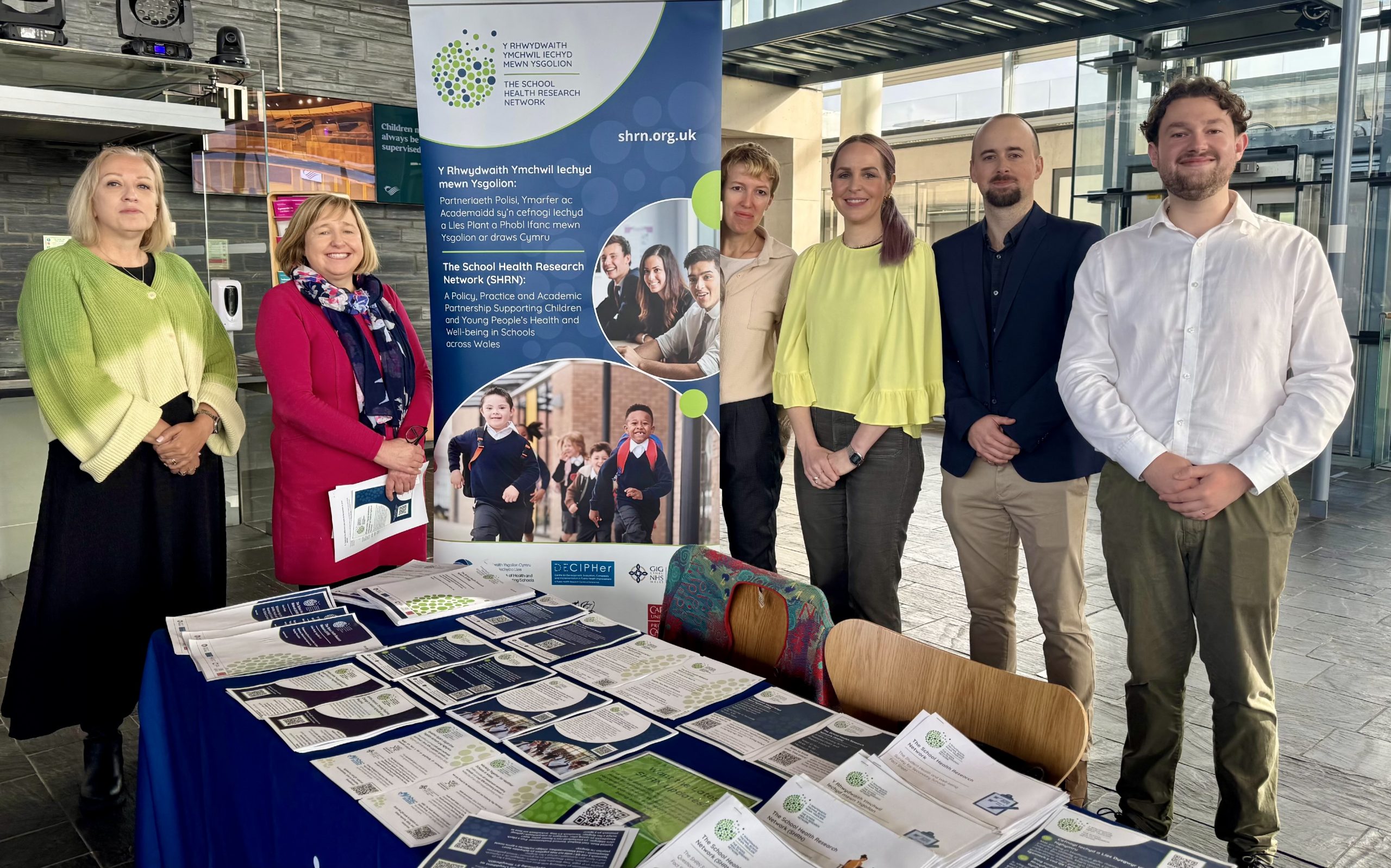
SHRN Showcases Latest Research at Senedd Marketplace Event


Left to right: Maria Boffey (SHRN External Affairs and Knowledge Exchange Manager), Lynne Neagle MS (Cabinet Secretary for Education), Freya Pryce (SHRN Senior Research Officer, Welsh Government), Charlotte Wooders (SHRN Engagement Manager), Nick Page (SHRN Senior Analyst), Rory Chapman (SHRN Digital Communications and Events Officer)

SHRN was proud to take part in the recent Senedd Marketplace, where we showcased our latest research and resources on learner health and well-being. The event was generously sponsored by the Cabinet Secretary for Education, Lynne Neagle MS, whose support helped create a warm and engaging atmosphere throughout the day.

The event sparked new conversations with school leaders, researchers, and policymakers about how SHRN data can drive real change in schools and support the Whole- School Approach To Emotional And Mental Well-Being.  

Maria Boffey, SHRN External Affairs and Knowledge Exchange Manager said:


Policymakers have the power to shape the environment in which schools operate, and that directly affects learner well-being. What made the Senedd Marketplace so valuable was the chance to have real conversations—sharing what’s happening on the ground in schools and showing how data can support better decisions’.

We’re excited to build on the connections made at the Senedd Marketplace and continue working with partners to improve learner health well-being across Wales’.

We extend our sincere thanks once again to the Cabinet Secretary for her continued support and visible commitment to SHRN’s work.

Categories
Blog

Turning Data into Action: Using the SHRN Dashboard to Support Youth Work in Wales

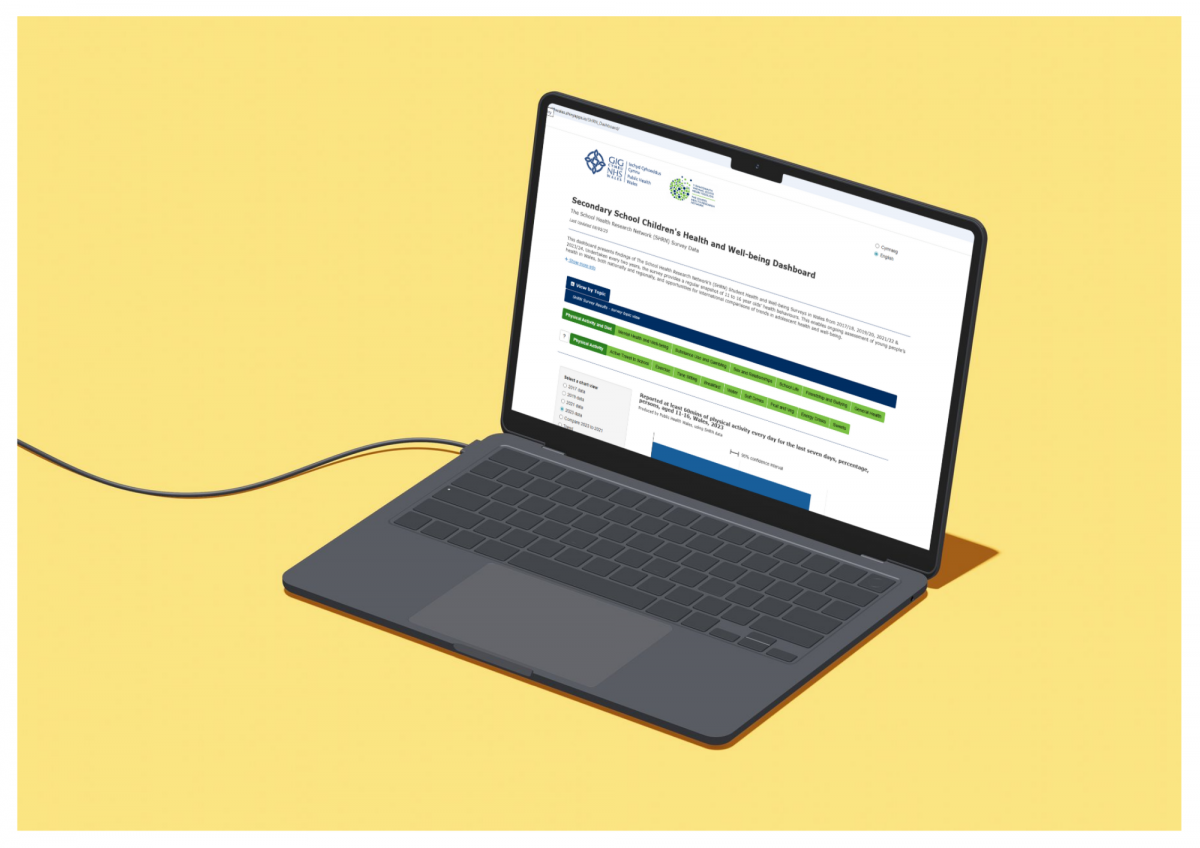
In this blog by Zoe Strawbridge,( Advanced Public Health Intelligence Analyst), Public Health Wales, Maria Boffey, (SHRN Knowledge Exchange and External Affairs Manager) and Charlotte Wooders, (SHRN Engagement Manager), explore how The Public Health Wales Secondary School Children’s Health and Well-being Dashboard: SHRN Survey Data Dashboard – developed in partnership with SHRN and Public Health Wales – can support the voluntary youth sector across Wales.

This blog highlights how accessible health and well-being data can help the sector design targeted programmes, build partnerships, and advocate for resources, all informed by the voices of young people.

The voluntary youth sector plays a vital role in supporting young people’s health and well-being. The Public Health Wales Secondary School Children’s Health and Well-being Dashboard: SHRN Survey Data Dashboard, offers a practical tool to strengthen that work.

Built on data from all 100% of secondary schools in Wales who take part in The SHRN Student Health and Well-being Survey, the dashboard makes national and regional data more accessible, supporting evidence-informed planning, delivery, and collaboration. This also supports alignment with the Welsh Government’s Youth Work Strategy and Well-being of Future Generations Act 2015 by enabling data-informed, youth-centred planning.

Since 2013, The SHRN Student Health and Well-being Survey in secondary schools has been a cornerstone in understanding and enhancing the health and well-being of young people in Wales.

Administered every two years to secondary school learners, The SHRN Student Health and Well-being survey covers a range of topics including mental health and well-being, physical activity and nutrition, substance use, sexual health, and social relationships.

In 2024, SHRN broaden its reach by launching a national roll out with primary schools across Wales, engaging nearly half of all primary schools in the data collection process. This expansion marks a pivotal step in building a clearer picture of children’s health and well-being from an earlier age, enabling tailored and focused support for key moments such as the transition to secondary school.

While the dashboard is not yet available for primary school data, reports from this phase of the survey can be accessed here offering valuable insights for those working with younger children.

Over the years, SHRN has helped shape a national approach to collecting and using data in schools. It’s been vital in guiding public health and education policies, programmes, and interventions that aim to improve the lives of children and young people across Wales.

The dashboard brings together data from The SHRN Student Health and Well-being Survey of secondary school learners in Wales. It’s free to access and designed to be easy to use.

Users can explore trends by year group, gender, age, local authority, health board, and more – with ethnicity breakdowns coming soon. All data is anonymous and aggregated.

The dashboard can benefit your work by:

  • Gaining a better understanding of young people’s (11 – 18 years old) health and well-being trends for topics such as mental health, physical activity, dietary behaviours, social media use, school connectedness, sexual health, substance use and social relationships – helping to shape more relevant and responsive support.
  • Identifying emerging needs within specific communities or age groups, allowing for early intervention and more targeted programmes.
  • Strengthening funding applications and project planning by backing up proposals with reliable, up-to-date evidence and data.
  • Collaborating more effectively with schools, health professionals, and other partners by working from a shared understanding of the data.

Whether you’re designing a new project, evaluating impact, or advocating for resources, the dashboard offers a solid evidence base to guide your work and make a bigger difference.

The following highlights are drawn from a sample of SHRN data available on the dashboard. They offer a snapshot of key trends in emotional health, physical activity, and loneliness among young people in Wales. These insights help us better understand how factors such as gender and household affluence can influence well-being, and they provide a valuable starting point for further exploration and discussion.

Emotional Health

  • More than half of girls (54%) in Wales reported experiencing feelings of low mood, irritability, nervousness, or trouble getting to sleep, while only about one-third of boys (32%) reported the same issues. 
  • Girls in lower affluence households (61%) were more likely to experience the above than those from higher affluence households (49%). 

Physical activity and exercise 

  • In 2023, the percentage of children living in high affluence households taking part in vigorous exercise outside of school time at least 4 times a week was 45%, whilst in low affluence households it was 32%.
  • Overall, there was a large gap between the percentage of boys versus girls taking part in exercise outside of school at 49% and 31% respectively. 

Loneliness

  • In 2023, 35% of 11–16-year-olds reported feeling lonely at least some of the time during the last summer holidays. When looking at this by gender we see that girls in particular are more affected with nearly 42% of girls feeling lonely compared to 27% of boys.

You can access the dashboard here. Once inside, use the filters to explore topics like “School Life” or “Physical Activity and Diet.”

You can break down the data by area, year group, or other characteristics, and view results as bar or line charts. Data can also be downloaded in MS Excel format.

  • Start with one topic area that aligns with your current work.
  • Use the filters to explore differences by area, age or gender.
  • Explore single years of data or trends over time
  • Download charts or data to support your next funding bid or team planning session.

Webinar demos and user guides are available on the Public Health Wales website.

For further anu queries of for further  support, please email: publichealthwalesobservatory@wales.nhs.uk.

The Public Health Wales Secondary School Children’s Health and Well-being Dashboard: SHRN Survey Data Dashboard is a practical and powerful tool to help the voluntary youth sector better understand young people’s needs.

If you’re already using the dashboard, we’d love to hear how! Sharing learning and ideas helps us all improve!

Please email Charlotte Wooders, SHRN Engagement Manager.